
GCC Market

Issue 92. Vol 1- (April 2026)
defy volatility by posting gains
Global markets were in the red as investors absorbed the Middle East crisis’ impact on the oil and gas markets and the wider global economy.
In the United States, the S&P 500 dropped around 5%, with the Nasdaq contracting by around 4.7%, and the MSCI Emerging Markets falling 13% in April. Brent crude prices rose 63.3% during the month, while the US benchmark West Texas Intermediate jumped 51%.
Most Gulf markets were also down, with the notable exception of Oman and Saudi Arabia.
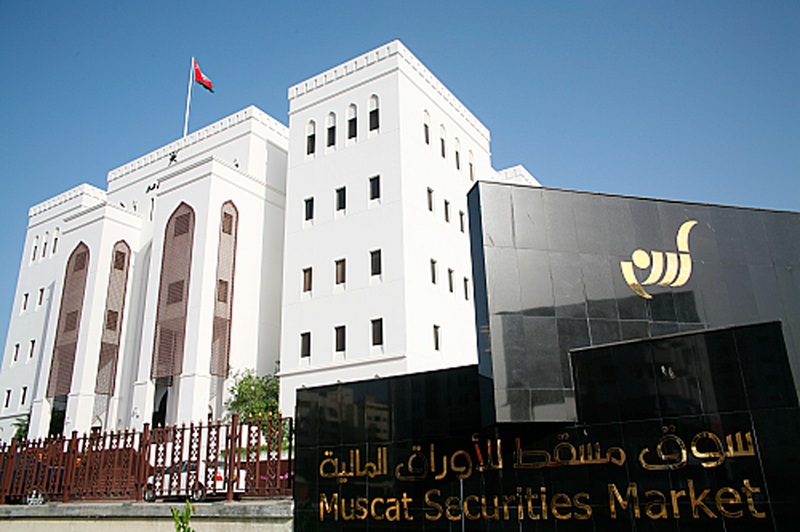
The MSX 30 Index surged 10.5% to close at 8,168.4 points, marking its ninth consecutive monthly gain. This sustained rally reflects improving domestic sentiment and relatively stable macroeconomic conditions. Gains were broad-based, with the services sector leading at 10%, followed by financials (3.6%) and industrials (2.4%). The breadth of the rally – combined with outsized gains in select mid-cap stocks – suggests growing investor confidence and momentum driven primarily by domestic factors rather than external conditions.
The MSX 30 is now up 39.2% for the year, making it among the best performing indices in the world. Its price-to-earnings (P/E) ratio has increased to 16.4 times in recent months, identical to the regional average.
Saudi Arabia’s market showed relative resilience and partial recovery, rising by 5% to close at 11,249.5 points. The rebound was supported by strong performance in banking and large-cap stocks, which helped offset broader pressures linked to energy price volatility and regional developments. The recovery lifted year-to-date gains to 7.2%, placing the market as the second-best performer in the GCC after Oman. The April listing of Saleh Abdulaziz Al Rashed & Sons Co. in the materials sector also points to continued primary market activity despite external uncertainties. The Saudi Tadawul is among the more expensive markets in the region, with a P/E ratio of 17.8 times.
PRESSURE MOUNTS ON OTHER GCC MARKETS
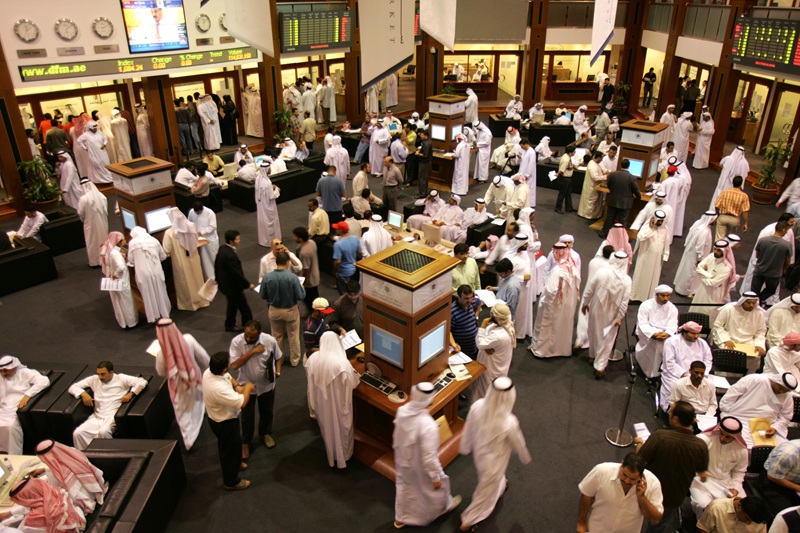
In contrast, the Dubai market recorded a sharp correction, with its main index declining by 16.4%, its steepest fall since the pandemic. Losses were widespread across sectors, with real estate registering a significant 27.4% decline, reflecting pressure on property-linked stocks. Consumer staples also fell sharply by 20.1%, highlighting broad-based weakness in demand-sensitive segments. Despite the decline, trading value rose by 26.2%. Dubai’s P/E ratio of 8.7 times makes it the lowest in the Gulf region, with year-to-date loss of 10.1%.
Abu Dhabi’s market also experienced a significant pullback, with its benchmark index falling by 8.9%, its largest decline in six years. The market is down 4.7% for the year. Sectoral performance was largely negative, with real estate contracting by 27.8% and healthcare by 17.2%, indicating broad pressure across the market. The only area of resilience was the materials sector, which posted a 5% gain. Trading activity showed mixed signals, with volumes increasing by 11.1% while total value edged down slightly, pointing to continued participation amid decreasing prices.
Despite the slump, Abu Dhabi remains the most expensive market in the region with a P/E ratio of 18.5 times.
Kuwait’s market recorded the smallest decline in the region, with the All-Share Index dropping by 1.8%. Energy stocks recorded the largest fall at 11%, followed by consumer discretionary and financial services. In contrast, the technology sector posted a modest gain of 1.9%. The relatively mild overall decline suggests some degree of stability, although year-to-date performance remains down 5.1% for the Premier Market. Kuwait’s P/E ratio stands at 13.7 times, with year-to-date losses of 5.1%.
Qatar’s market declined by 7.8% in April, reversing early gains that had briefly pushed the index above 11,000 points. All sectors recorded losses, with transportation plummeting 12.4%, followed by industrials (-7.1%) and banking (-5.7%). The broad-based nature of the downturn indicates weak sentiment across the market, although some buying activity later in the month led to a partial recovery. Year to date, the index is down 5.3%. Qatar’s P/E ratio of 11.4 times makes it the second lowest after Dubai.
Bahrain’s market also faced downward pressure, with the All-Share Index shrinking by 7.8%. Losses were recorded across all sectors, led by a 19.9% drop in materials, driven by declines in a single large constituent. The financial sector fell by 5.4%, contributing to the overall fall. The concentration of the market means that movements in a few key stocks can have an outsized impact on index performance, amplifying volatility during periods of stress. Bahrain’s P/E ratio stands at 16.1 times and is now down 8.1% for the year.