
Aviation

Issue 92. Vol 1- (April 2026)
boost from LCC acquisition
Oman’s aviation sector is entering a new phase of consolidation and strategic alignment as the government completes its acquisition of SalamAir, signalling a more coordinated approach to national air transport development. The move reflects a broader effort to position aviation as a central pillar of economic diversification under the country’s Vision 2040 agenda, while aligning with long-term growth trends across the Middle East aviation market.
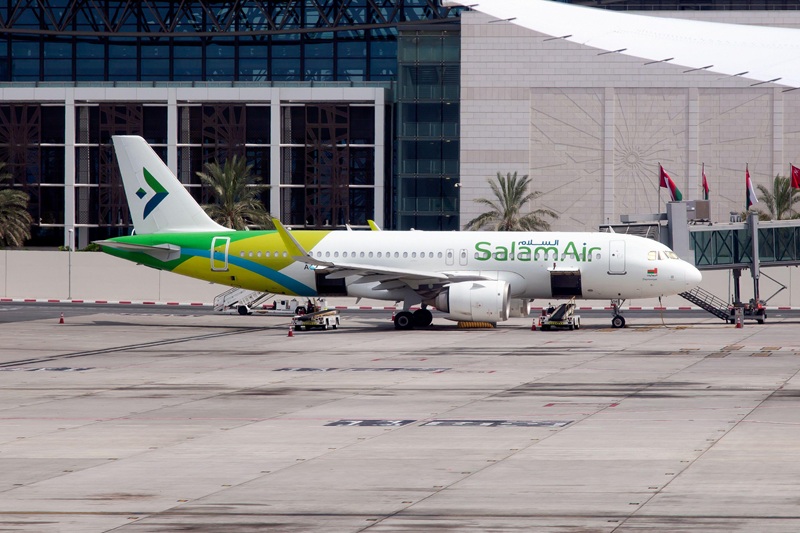
The integration of the low-cost airline into the state’s aviation portfolio – alongside Oman Air – marks a structural shift toward a dual-carrier model. While both airlines will continue to operate as independent brands, the strategy is designed to optimise network planning, reduce route overlap, and improve fleet utilisation.
This also allows Oman Air to focus on full-service, long-haul and premium segments, while SalamAir continues to expand in the low-cost, short- to medium-haul market. Such segmentation mirrors successful models in other markets, where complementary carriers serve distinct demand profiles while benefiting from shared infrastructure and coordinated planning.
From a national perspective, the acquisition reinforces aviation’s role as an enabler of tourism and trade. Recent geopolitical events also mean Oman’s strategic location has only grown in status.
“To ensure uninterrupted commercial flow and accelerate response times for transport and logistics demands, the [Ministry of Transport, Communications and Information Technology], has introduced a suite of advanced facilitations,” according to Oman News Agency. “Chief among these is the expedited entry of empty land transport vehicles arriving from GCC states, enabling efficient cargo loading from Oman's ports through the ‘Bayan’ system via swift and simplified digital processes.”
The measures highlight the strategic importance of transit transport in positioning Oman as a vital conduit for goods entering the Gulf and broader regional markets. “By optimising freight efficiency and reinforcing supply chain continuity, the Sultanate of Oman continues to solidify its standing as a dynamic logistics corridor and a reliable commercial gateway. The initiative opens new avenues for regional economic integration and deepens collaborative trade ties with neighbouring nations,” Oman News Agency noted.
The country has been steadily investing in airport infrastructure, connectivity, and tourism assets, as it continues to attract international visitors. Improved coordination between carriers is expected to expand route networks, increase flight frequencies, and enhance connectivity to key source markets.
REGIONAL STRENGTH
At the regional level, the outlook for aviation remains structurally strong. The Middle East continues to function as a global transit hub, linking Europe, Asia, and Africa. Its geographic advantage, combined with sustained investment in airport capacity and airline expansion, underpins long-term growth prospects.
According to projections from the International Air Transport Association (IATA), passenger traffic in the Middle East is expected to more than double over the next two decades, with annual growth rates outpacing the global average. The region is projected to handle well over 500 million passengers annually by the early 2040s, reflecting both rising demand for air travel and the continued expansion of hub-based connectivity.
IATA expects the Middle East to join Asia Pacific and Africa as the primary drivers of growth over the 2024-2050 period.
“The Middle East region is projected to be the third fastest-growing regional market, with CAGRs (compounded annual growth rate) of 3.5% in the high-growth scenario, 3.1% in the mid-growth scenario, and 2.5% in the low-growth scenario,” IATA said in its latest report on passenger demand projections. “The Middle East market exhibits a structurally distinct demand profile, in which strong overall traffic growth is, to a large extent, driven by transfer demand that facilitates long-haul connections between Europe, Asia, Africa, and Oceania.”
Several drivers underpin this trajectory. Demographic expansion, rising incomes, and increasing propensity to travel across emerging markets are expected to sustain demand. In addition, the Middle East’s role as a transfer hub is likely to remain intact, particularly as airlines continue to develop long-haul networks connecting secondary cities across continents. The growth of low-cost carriers is also reshaping regional aviation dynamics, stimulating price-sensitive demand and opening new routes that were previously underserved.
OMAN TAKES A DIFFERENT APPROACH
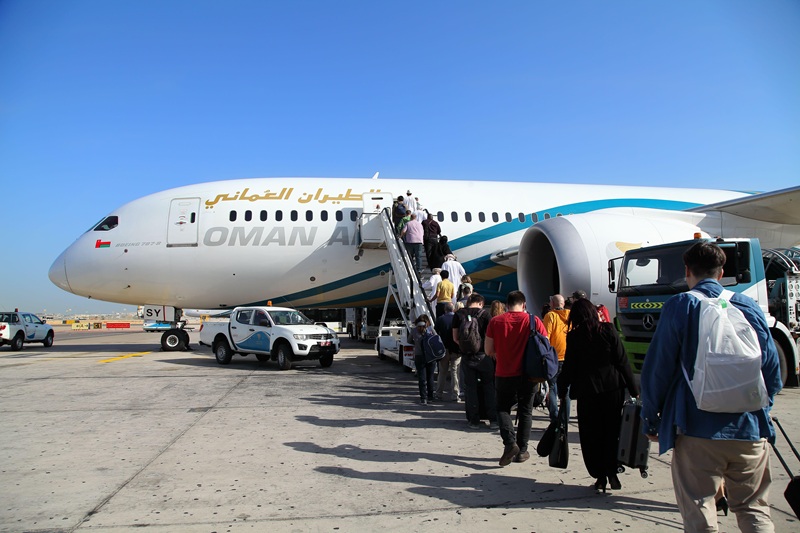
For Oman, these regional dynamics present both opportunities and competitive pressures. Its strategy is less about competing directly on volume and more about carving out a differentiated position. This includes focusing on point-to-point connectivity, niche tourism segments, and selective route expansion that aligns with national economic priorities.
The government’s emphasis on maintaining separate operational identities for Oman Air and SalamAir is central to this approach. By preserving brand distinction while improving backend coordination, the Sultanate aims to capture a broader spectrum of travellers without diluting service quality or market positioning. At the same time, efforts to enhance financial performance – through improved cost structures, revenue quality, and operational efficiency – reflect a recognition of the sector’s historically challenging economics.
Beyond passenger traffic, aviation development in Oman is closely linked to broader ecosystem growth. Ground services, logistics, and ancillary services stand to benefit from increased traffic volumes and operational integration. Over time, this can contribute to job creation, private sector participation, and value chain development within the aviation ecosystem.