GCC Market

Issue 63. Vol 1- (JANUARY 2021)
Most Gulf markets ended the last month of 2020 in positive territory, but it was not enough to erase their losses for the year.
Combined, the GCC S&P index declined 3.7% for the year, lagging behind MSCI Emerging Market Index, which rose 15.4%, and the MSCI World Index which climbed 14.1%.
Gulf markets were primarily weighed down by lower crude prices, which averaged USD 51.8 per barrel in 2020, compared to USD 66 per barrel in 2019, a 21.5% decline.
But regional markets clawed back some of the losses in the latter half of 2020, with most indices posting gains in the last two months of the year.
OMAN AND SAUDI
Oman's MSM 30 Index built on its 2.4% rally in November with 0.4% gains in December to end the year on a positive note. However, the index fell 8.1% for the year.
The industrial index led the gains in the year, rising 2.1%, but services index declined 16.1% and financial services index was down 11% during the 12-month period.
A new budget, a fresh five-year plan and the release of Oman Vision 2040 should help the Sultanate’s blue chips benefit from increased economic activity this year.
Saudi Arabia’s Tadawul All Share Index (TASI), the region’s largest bourse by market cap, was also the GCC’s best performing market, rising 3.6% during the year. It was the fifth consecutive yearly gain for the Tadawul.
The Saudi market plunged 7.5% in February and another 14.7% in March, but has staged a smart recovery since then to end up in positive territory.
Most indices on the Tadawul posted gains for the year, with software and services index rising 185.6% and consumer durables expanding 63.2%, as technology stocks and essential goods were among the biggest beneficiaries of lockdowns. Among laggards, commercial and professional services fell the most, declining 14.9% during the year.
REST OF THE GCC
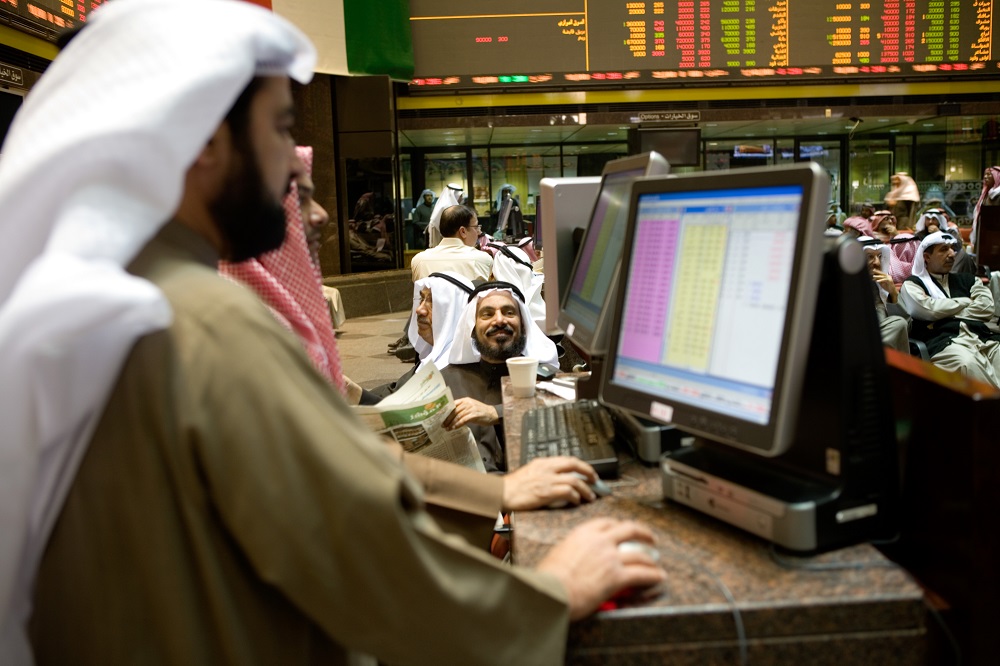
Kuwait, however, ended its four-year positive streak, falling 11.7% in 2020 — the most by any GCC market. The All Share Index rose 1.6% inDecember, as markets rebound on higher oil prices and news of vaccine rollouts.
The insurance index led the way last year, rising 21.2%, while consumer goods rose 17.1%. On the end of the spectrum, consumer services declined the most, by 23.7% last year.
The UAE markets were also down for the year. The Abu Dhabi ADX General Index was up 1.6% in December, building on its 6.5% surge in November to narrow its losses for the year to just 0.6%. The ADX had gained 3.3% in 2019.
Two of Abu Dhabi’s indices notched up triple-digit gains:the investment and financialservices sub-indices jumped 125.5% during the year, while consumer staples soared 118.5%.
Dubai’s losses for the year were much steeper, despite a 10.6% gain in November and 3% rally in December. The DFM General Index still ended the year down nearly 10%. The DFM had risen 9.3% in 2019, but wiped out all the gains in what proved to be a volatile period for investors.
Most Dubai sub-indices posted losses during the year, with consumer staples falling nearly 45%, banks declining 17.4% and the popular real estate index falling 8.2%.
Qatar was the only other GCC market that was in positive territory, managing a paltry 0.1% gain for the year, and extending its winning streak for a third consecutive year.
After rapid declines in the first half of the year, the QE 20 index recovered, with gains of 5.9% in November and 1.7% in December, to end the year in the black.
Bahrain rose 0.8% in December, but ended the year down 7.5%. Services (up 25.5%) and industrial indices (up 22.1%) led the gains, with investments (down 16.8%) and hotels and tourism (down 16.2%) among the laggards.
GLOBAL ASSETS
Among other markets, gold was a major beneficiary of the weak US dollar, rising 20% in 2020, as investors looked for safe haven assets.
On the other hand, some developed equity markets are looking frothy, which is worrying analysts. The S&P 500 rose 3.71% in December, bringing its returns for the year to 16.26%, while the Dow Jones Industrial Average gained 3.27% for the month and was up 7.25% yeartodate.
“Specifically, 2021 is projected (consensus operating estimates) to post a record year, as treatment fully overtakes spread and closures, with the forward P/E at 23 and the trailing 12-month P/E at 30. Even if we get those record earnings – an expected 23 over a year away–justifying that much of a premium is unprecedented.”
Amid this backdrop, emerging markets are expected to benefit as investors look to them for undervalued stocks.
With most Gulf markets announcing investment-oriented budget and looking to revive their economy with reforms, GCC markets may present bargain valuations in 2021.
 Share Now